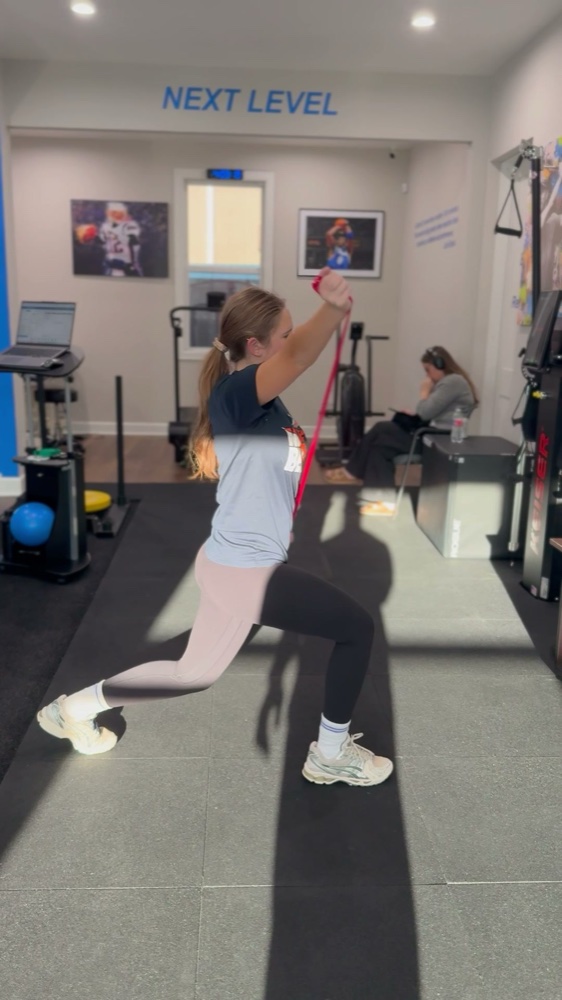
Two-a-days are a couple of weeks out. Across Katy, athletes who spent most of the summer off their feet are about to go from near-zero to five practices a week in full Texas heat — and that jump, not contact, is what sends most of them to us in the first month of the season.
The pattern is consistent enough that we can almost set a calendar by it. Late August brings hamstrings, shin pain, jumper's knee and shoulders that started barking in the first week of throwing. Almost none of it comes from a collision. It comes from tissue being asked to absorb a workload it has not seen since May.
Why Early-Season Injuries Are Mostly a Math Problem
Muscle, tendon and bone all adapt to load — but they adapt at different speeds. Your cardiovascular system responds within days. Muscle takes a few weeks. Tendon and bone remodel over months.
That mismatch is the whole problem. An athlete can feel conditioned enough to go hard by day four of camp while the Achilles or patellar tendon is still months behind. They feel ready, so they push, and the tendon takes the difference. That is why the athlete who "wasn't even tired" is the one limping by week two.
Sudden spikes in weekly workload are the single most reliable predictor of soft-tissue injury in the research. A summer of nothing followed by a week of everything is the largest spike in the athletic calendar.
What Actually Reduces the Risk
The interventions with real evidence behind them are unglamorous:
- Ramp up before camp starts, not during it. Even two weeks of progressive running and lifting meaningfully flattens the spike. Something is dramatically better than nothing.
- Train the hamstrings eccentrically. Nordic curls and their progressions are among the best-supported interventions in sports medicine for cutting hamstring strain rates. Most high school programs still skip them.
- Build calf and foot capacity. Shin pain and Achilles trouble usually trace back to a calf complex that cannot handle repeated ground contact.
- Throwers need posterior shoulder and scapular work before the volume arrives. Once the season starts there is no room to build it.
- Respect the heat. In a Katy August, poor hydration and sleep degrade tissue tolerance and coordination — which is how the awkward step happens in the first place.
The Screen Is Worth More Before the Season Than After
A movement assessment now finds the asymmetries that predict trouble: the hip that will not rotate, the ankle that has been stiff since a sprain two seasons ago, the single-leg control gap between left and right. Those things are correctable in July. In October, with games every week, the honest answer is usually management rather than correction.
This is the part parents tend to be surprised by — an athlete can be strong, fast, and still carry an obvious asymmetry that nobody has ever tested for, because nothing has hurt yet.
If Something Is Already Nagging
An ache that lingered through summer workouts will not resolve because the season started. It will get louder under five-day weeks. The window to deal with it cheaply is right now, before it becomes a mid-season decision about missing games.
We are cash-pay, which means no referral is needed and no insurance approval has to clear before an athlete can be seen. Sessions are longer and one-on-one with a doctor of physical therapy, which matters when the goal is finding a movement problem rather than running a protocol.
Book a pre-season assessment in Katy — the useful time for this is the next two weeks, before camp turns a small asymmetry into a season-long problem.