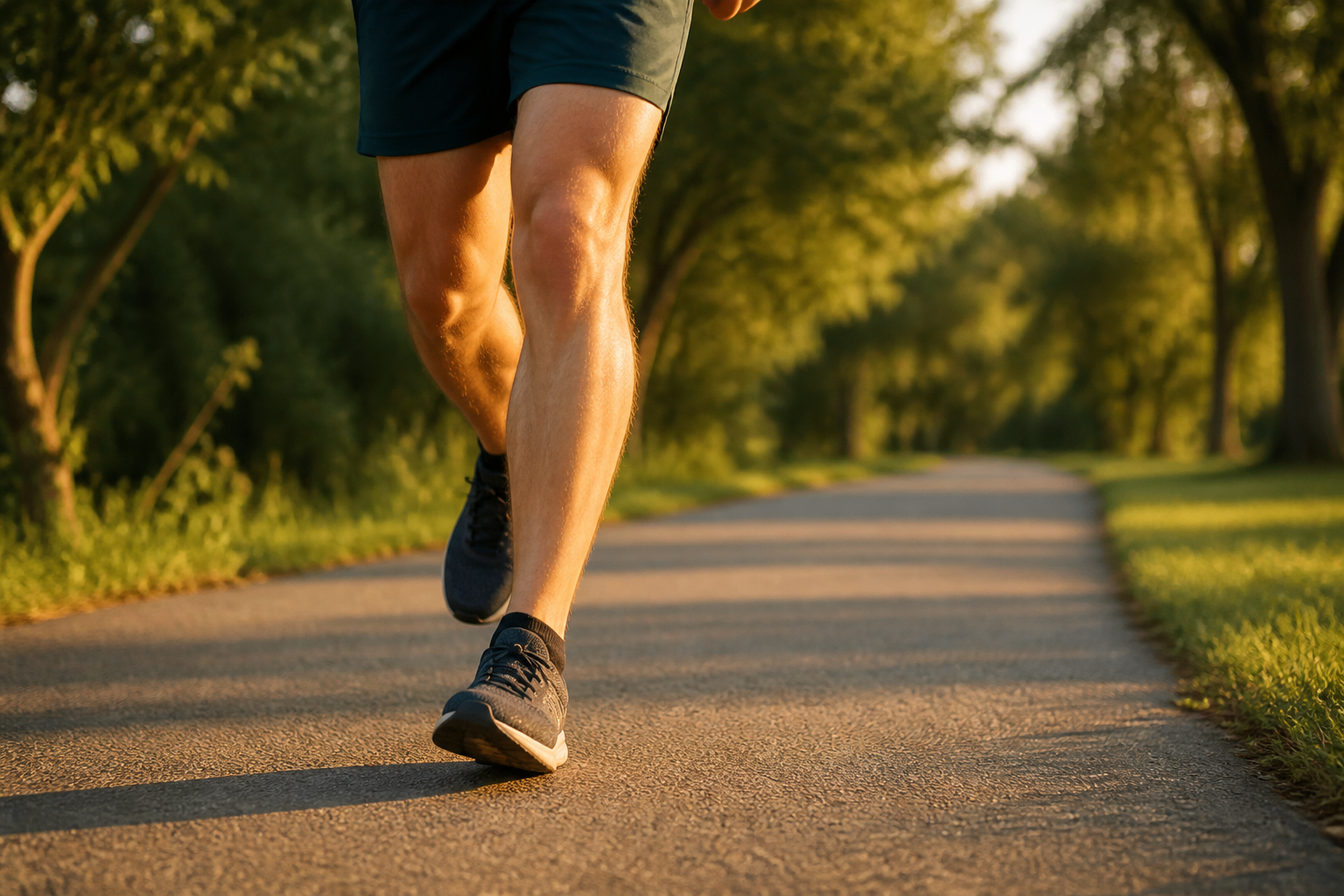
Runner's knee has a frustrating pattern: it eases up when you back off, then returns the moment you build your mileage again. That dull ache around or behind the kneecap — worse on stairs, hills, squats, or after a long stretch of sitting — is usually patellofemoral pain, and it is one of the most common issues runners in Katy bring to Elev8 Physical Therapy. The condition is very treatable, but not by rest alone, because rest addresses the symptom and not the reason the kneecap is getting overloaded in the first place.
What Runner's Knee Actually Is
Your kneecap (patella) glides in a groove at the end of your thigh bone every time your knee bends. When the forces around the knee are balanced, it tracks smoothly and the joint tolerates thousands of steps without complaint. When they are not — because of hip weakness, stiff ankles, training spikes, or running mechanics — the pressure between the kneecap and the groove climbs, and the tissue underneath it gets irritated. That irritation is the ache you feel, and it tends to show up exactly where runners load the knee most: downhills, stairs, and the miles at the end of a long run.
The key point: the kneecap is usually the victim, not the culprit. Something above or below it is changing how it is loaded.
Why Rest Alone Rarely Works
Backing off running lets the irritation settle, which is why a week or two off feels like a cure. But if the hip strength, mechanics, or training pattern that overloaded the knee has not changed, the same load returns with the first normal week of running — and so does the pain. That cycle of flare, rest, and flare again is the most common story we hear at the first visit.
How Elev8 Evaluates It
At Elev8 Physical Therapy in Katy, the evaluation looks well beyond the knee itself:
- Hip and glute strength testing — weakness here is the single most common driver, because the hip controls how the thigh rotates under the kneecap with every stride.
- Movement assessment — watching how you squat, step down, and land tells us how the knee is actually being loaded, not just how strong it tests on a table.
- Ankle and foot mechanics — a stiff ankle or collapsing arch changes everything upstream.
- Training history — mileage jumps, new shoes, added speed work, or hill repeats often mark exactly when the overload began.
The finding drives the plan. Two runners with identical pain can need very different programs.
What Treatment Looks Like
Care at Elev8 is active from day one. Depending on what the exam finds, a plan typically combines:
- Progressive strength work for the hips, quads, and calves — built to restore the knee's tolerance for load, not just to feel productive.
- Movement and gait retraining — small changes in step rate or landing mechanics can meaningfully drop the pressure on the kneecap.
- Dry needling when overworked tissue around the knee and hip needs help settling so the strength work can progress.
- A structured return-to-running plan — the part most runners never get. We rebuild mileage on a schedule the knee can adapt to, instead of guessing.
Most runners do not have to stop running entirely during care. We usually adjust volume and terrain while the knee's capacity is rebuilt, which keeps fitness intact and makes the return far smoother.
When to Get It Looked At
A knee that aches for a day after a hard run and settles is usually just training load. A knee that hurts during easy runs, flares on stairs, aches after sitting, or has forced you to cut runs short more than a couple of times is telling you the overload is established — and established patterns take longer to unwind the longer they run. If you are in Katy or the surrounding area and this sounds like your knee, an evaluation will tell you exactly what is driving it.
Frequently Asked Questions
Do I have to stop running during treatment?
Usually not entirely. In most cases we modify volume, terrain, and intensity while the knee's capacity is rebuilt, then progress mileage on a structured plan. Complete rest is reserved for the small number of cases that genuinely need it.
Is runner's knee the same as a torn meniscus or arthritis?
No. Patellofemoral pain is an overload problem of the kneecap joint and responds well to conservative care. Part of the first visit is confirming the diagnosis — the exam findings for a meniscus problem or arthritis look different, and the plan changes accordingly.
How long does it take to get better?
Irritation that started recently can settle in a few weeks. A pattern that has cycled for months typically needs a longer strength progression before mileage rebuilds fully. Either way, you should see clear markers of progress — pain during specific tests, stair tolerance, run distance before symptoms — improving throughout care.
Do I need a physician referral to be seen in Katy?
Texas allows direct access to physical therapy, so you can typically start an evaluation at Elev8 Physical Therapy without a referral. Contact the clinic and we will walk you through it.