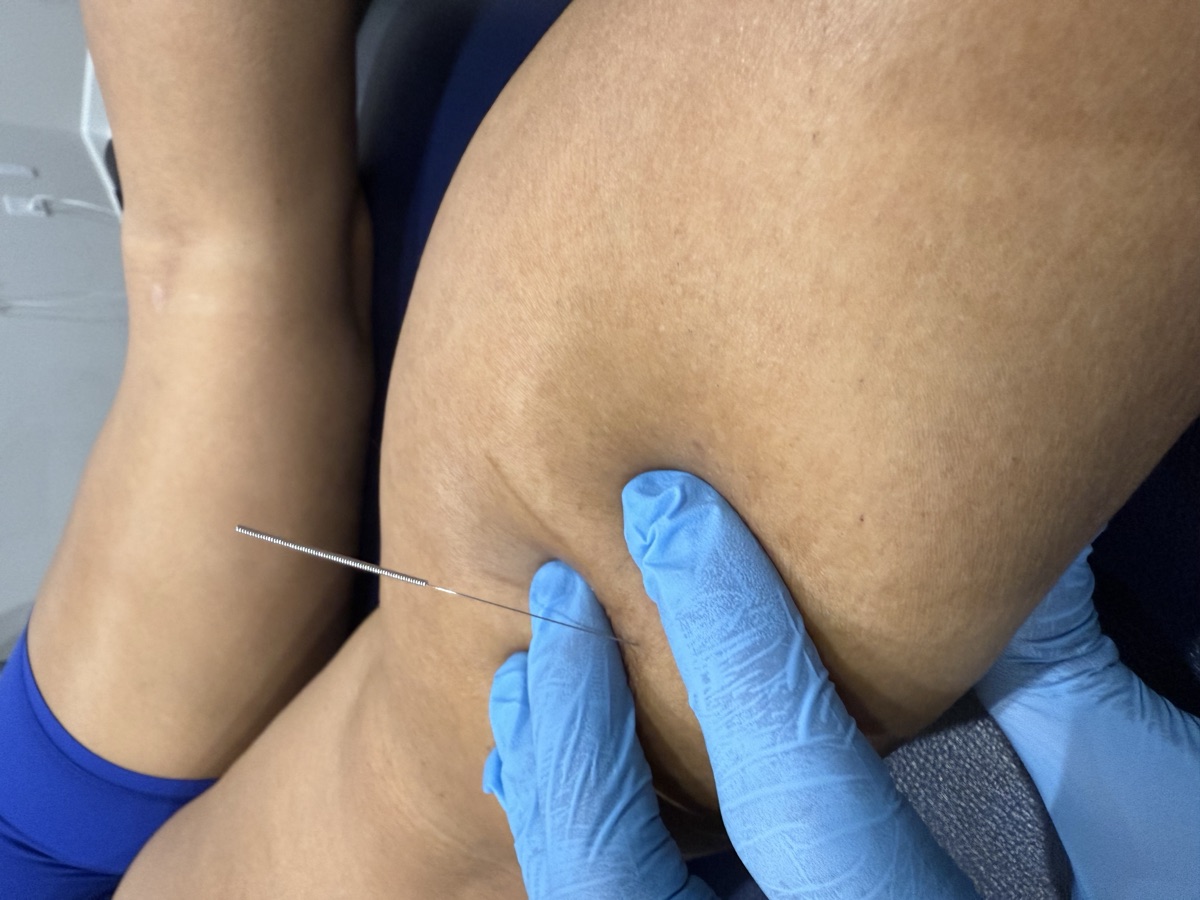
Dr. Kenneth Nwosu performing dry needling at Elev8 Physical Therapy in Katy, TX

Pain Management · Katy, TX

Dry Needling
in Katy, TX

Dr. Kenneth Nwosu uses evidence-based dry needling to release myofascial trigger points, relieve muscle pain, and restore movement — one patient at a time, in a cash-pay clinic with no referral required.

Dr. Kenneth Nwosu, PT, DPT, C-PSDr. Kenneth NwosuPT, DPT, C-PS · Certified in Dry Needling

What It Is

Trigger-Point Release with a Thin Needle

Dry needling is a physical therapy technique in which a thin, sterile filiform needle is inserted directly into a myofascial trigger point — a tight, irritable knot inside a muscle that causes local pain and radiates discomfort to nearby areas. The needle produces a brief involuntary muscle twitch that releases the knot, increases local blood flow, and resets the pain cycle.

At Elev8, dry needling is always integrated into a full assessment and treatment plan — not offered as a standalone procedure. Dr. Ken identifies the specific trigger points driving your pain pattern, treats them directly, and pairs the session with manual therapy and corrective exercise to lock in the result.

Dry needling is not acupuncture. It shares the same tool but follows Western musculoskeletal science, not meridian theory. Read the full comparison on the Elev8 blog →

ModelOne-on-one with Dr. Ken
PaymentCash · Credit · FSA · HSA
ReferralNot required
InsuranceCash-pay practice

Conditions We Treat

What Dry Needling Can Help

Dry needling is effective for a range of musculoskeletal and pain conditions. These are the most common presentations Dr. Ken addresses at Elev8:

Low back pain

Paraspinal and gluteal trigger points that refer pain down the leg

Neck pain & headaches

Suboccipital and upper trap knots that drive tension headaches

Shoulder pain

Rotator cuff trigger points, impingement, and frozen shoulder stiffness

Sciatica

Piriformis and deep hip rotator tension compressing the sciatic nerve

Plantar fasciitis

Intrinsic foot and calf trigger points that maintain heel pain

Tennis & golfer elbow

Forearm extensor/flexor trigger points that perpetuate lateral and medial elbow pain

IT band syndrome

TFL and lateral quad knots driving knee pain in runners

Sports injuries

Hamstring strains, quad tightness, and post-injury muscle guarding

Post-op scar tightness

Myofascial restrictions that develop after surgery or immobilization

Chronic muscle tightness

Persistent knots that resist stretching, massage, and exercise alone

What to Expect

What a Session Looks Like

01
Assessment

Dr. Ken reviews your history, identifies the pain pattern, and palpates to locate active trigger points before any needle is placed.

02
Needling

Thin, sterile needles are inserted into the target trigger points. You may feel a brief twitch or dull ache — that's the knot releasing. Needles stay in for seconds to a few minutes depending on tissue response.

03
Manual Therapy

After needling, Dr. Ken often follows with manual therapy — soft tissue mobilization, joint manipulation, or myofascial release — to reinforce the gains.

04
Movement & Exercise

You finish with targeted corrective exercises to retrain the muscle through its new range. This is what separates PT-based dry needling from a standalone procedure.

Who It's For

Built for Athletes, Post-Op Patients, and Chronic Pain Sufferers

Dry needling works best when muscle trigger points are a primary driver of your pain — not just a secondary symptom. Good candidates include:

  • Athletes dealing with recurring muscle tightness, pulls, or overuse injuries
  • Post-surgical patients with scar tissue or guarded muscle patterns slowing recovery
  • Office workers with chronic neck, upper back, or headache patterns tied to posture
  • Patients who have tried stretching, massage, and rest without lasting relief
  • Anyone with a specific trigger point pattern confirmed by a physical exam

Dr. Ken will tell you directly if dry needling is not the right tool for your condition. At a cash-pay practice, the only goal is the fastest, most effective path to your result.

Patient Words

"10/10 recommend Elev8 PT, helped me get back from normal daily activities to playing sports again... built my rehab from the foundation up... reduced pain from a second labrum tear in the same hip... intentional, results driven physical therapy."

— Nee N.

"Dr. Ken has been an absolute game-changer for our son. He brings expertise, patience, and genuine care to every session... explains things clearly, keeps our son motivated, and partners with us every step of the way."

— Shawn T.

FAQ

Common Questions About Dry Needling

Ready to Start?

Book a Dry Needling Session in Katy, TX

No referral. No insurance hassle. Just Dr. Ken, an evidence-based plan, and your result. Cash, Credit, FSA, and HSA accepted.

1325 Main Street Suite 205 · Katy, TX 77494 · Mon–Thu 8am–7pm · Fri 8am–5pm

Treatment guide

Questions patients ask about dry needling in Katy

Dry needling is a technique that uses a thin needle to address myofascial trigger points as part of a physical therapy plan. At Elev8, the technique is considered alongside movement, strength, manual therapy, and your goals rather than treated as a stand-alone answer for every kind of pain.

What is dry needling intended to do?

A trigger point is a sensitive area within a muscle that can contribute to local or referred discomfort and restricted movement. A trained clinician may use dry needling to influence that area, then pair it with movement or loading so the change is useful outside the treatment room.

The technique does not replace an examination. Pain can come from many sources, and a needle is not automatically appropriate because a muscle feels tight. The first step is understanding the presentation, the relevant medical history, and what you want to do more comfortably.

How is dry needling different from acupuncture?

The same type of sterile needle may be used, but the clinical frameworks differ. Dry needling is commonly used to target myofascial trigger points and movement-related findings. Acupuncture follows Traditional Chinese Medicine concepts such as meridians. Patients should ask which approach a provider is using and what it is intended to address.

At Elev8, dry needling is described as one tool within evidence-based physical therapy. It may be paired with exercise, manual therapy, education, or load management. The plan should be explained before treatment begins, including what you may feel and what to do afterward.

Does dry needling hurt and what might I feel?

People describe the sensation differently. You may feel a brief prick, pressure, or a muscle twitch when a trigger point is reached. Dr. Kenneth Nwosu can adjust the approach based on your feedback. It is appropriate to speak up if the sensation is sharper, more intense, or otherwise different from what you expected.

Some people experience temporary soreness afterward, similar to the feeling after unfamiliar exercise. The response should be discussed in the context of the treated area and your overall symptoms. Persistent, unusual, or concerning symptoms should be reported to the office or evaluated by the appropriate medical provider.

What happens during a dry needling session?

The visit begins with a review of the target problem and a check that the technique fits the plan. You are positioned so the area can be reached safely. The clinician explains the steps, uses appropriate clean technique, and checks your response during the treatment.

Afterward, the visit may include an active movement, strengthening drill, or mobility exercise. That transition matters because the goal is not simply to create a short-lived sensation. The treatment should connect to a functional change that can be practiced and monitored.

What should you do before and after treatment?

Tell the office about relevant medical history, medications, pregnancy, skin concerns, infection, bleeding risk, allergies, or a strong fear of needles before the appointment. Eat and hydrate normally unless a medical provider has given you different instructions, and wear clothing that allows access to the treatment area.

Gentle movement and normal hydration may be comfortable after treatment. Ask what activity level makes sense for your specific area and training schedule. Do not use a general internet protocol as a substitute for instructions from the clinician who examined you.

How much does dry needling cost and is insurance billed?

Elev8 is a cash-pay practice. Current rates are discussed when you book, and Cash, Credit, FSA, and HSA are accepted. The technique is planned as part of the visit rather than advertised with a made-up price or guaranteed number of sessions.

No referral is required to start a conversation in Texas. If you want to use out-of-network benefits, ask the practice what documentation it can provide and confirm reimbursement rules with your plan directly. Elev8 does not promise coverage or a specific reimbursement amount.

When might another approach be more appropriate?

A different plan may be better when symptoms are not primarily muscular, when there is an active infection or skin problem, when the medical history raises a safety concern, or when the main need is diagnosis or urgent medical care. A thorough evaluation helps keep the treatment proportionate to the problem.

Dry needling can be useful for some people and unnecessary for others. The most helpful question is not whether it is popular, but whether it fits the findings, risks, preferences, and functional goal discussed with your physical therapist.